Executive Findings · Study 03
- 01Typography & Masthead Precision: GPT Image 2.6 Flare at Medium (10 cr / ~$0.10) and High (35 cr / ~$0.35) quality tiers achieved a 94% first-pass legibility rate on sub-8pt packaging copy and Swiss editorial mastheads, outperforming Nano Banana 2.1 (78%) and Seedream 5.5 (71%) on multi-line ingredient tables.
- 02Flat-Rate 4K Unit Economics: Nano Banana 2.1 delivers native 4K output at a flat 16 credits (~$0.16) without quality-tier multipliers, matching GPT Image 2.6 Flare 4K Low (16 cr / ~$0.16) while undercutting GPT Image 2.6 Flare 4K High (112 cr / ~$1.12) by 85.7% per hero asset.
- 03Multi-Reference Conditioning Ceilings: GPT Image 2.6 Flare leads multi-angle SKU and character consistency with 16 reference slots, followed by Nano Banana 2.1 at 14 slots and Seedream 5.5 at 10 slots—making input capacity the primary gating factor for multi-SKU lookbooks.
- 04Two-Stage Draft-to-Hero Routing: Blocking 10 compositional layouts on FLUX.2 Klein 4B at 1 credit (~$0.01) per render before promoting the winning seed to a flagship model via Image-to-Image reduces campaign exploration spend by 72% to 88% inside a single $5 never-expiring CreoArt pricing wallet.
Commercial art directors stopped evaluating image synthesis models on stylized fantasy portraits eighteen months ago. In production environments across e-commerce packaging, retail point-of-sale displays, and editorial print, an image generator is only viable when it clears three unforgiving operational gates: crisp micro-typography, multi-reference product lock, and predictable unit cost at print resolution.
A single distorted serif on a cosmetic dropper bottle or a warped SKU badge forces a manual retouching cycle that erases the speed advantage of generative workflows. Similarly, generating a ten-piece seasonal apparel lookbook collapses if the model loses fabric weave or logo placement past the sixth reference image.
Study 03 isolates how three flagship image architectures—GPT Image 2.6 Flare, Nano Banana 2.1, and Seedream 5.5—perform under controlled commercial stress tests. All benchmarks were executed inside CreoArt’s unified pay-as-you-go AI generator wallet across November 2026 to establish exact credit-to-USD unit economics for creative teams.
Between November 1 and November 22, 2026, our imaging benchmark team ran a standardized 10-prompt commercial rubric across all three flagship models plus FLUX.2 Klein 4B for draft baseline comparisons. Test categories included curved cosmetic glass labels, multi-column Swiss editorial mastheads, 10-to-16 slot multi-angle SKU and character shoots, and specular tabletop glass lighting. All credit calculations reflect CreoArt’s $5 never-expiring pack (500 credits at exactly $0.01 per credit across 45 live models), backed by automatic 100% credit refunds on any failed upstream generation runs.
Spec, Reference Ceiling & Unit-Cost Matrix (1K–4K)
Selecting an image engine without mapping resolution multipliers to deliverable specs leads to silent budget overruns. While GPT Image 2.6 Flare scales across five distinct quality multipliers (Low 1x, Medium 2x, High 7x, XHigh 12x, and Max 20x) on base rates of 5, 10, and 16 credits, Nano Banana 2.1 and Seedream 5.5 operate on deterministic flat-rate resolution pricing.
| Model | 1K Cost (Cr / USD) | 2K Cost (Cr / USD) | 4K Cost (Cr / USD) | Max Reference Slots | Aspect Ratios | Typography Fidelity | Primary Commercial Role |
|---|---|---|---|---|---|---|---|
| GPT Image 2.6 Flare | Low: 5 cr ($0.05)<br>Med: 10 cr ($0.10)<br>High: 35 cr ($0.35) | Low: 10 cr ($0.10)<br>Med: 20 cr ($0.20)<br>High: 70 cr ($0.70) | Low: 16 cr ($0.16)<br>Med: 32 cr ($0.32)<br>High: 112 cr ($1.12) | 16 images | 16 ratios (incl. 3:1, 21:9) | 94% pass rate (Med/High tiers) | Small packaging copy, Swiss mastheads, 16-slot SKU lock |
| Nano Banana 2.1 | 7 cr ($0.07) | 11 cr ($0.11) | 16 cr ($0.16) | 14 images | 15 ratios (incl. 4:1, 8:1) | 78% pass rate (Strong headlines) | Flat-rate native 4K heroes, natural daylight, ultra-wide banners |
| Seedream 5.5 | 10 cr ($0.10) | 14 cr ($0.14) | N/A (Pair w/ Image Upscaler) | 10 images | 10 standard ratios | 71% pass rate (Display titles) | Specular studio lighting, frosted glass shaders, fashion editorials |
| FLUX.2 Klein 4B | 1 cr ($0.01) (+3 free daily trials) | N/A | N/A | 0 (Text-to-Image) | Standard commercial | Basic display text only | High-speed framing drafts & lighting composition blocks |
5-Dimension Controlled Benchmark Scores
(a) Small Packaging Labels & Editorial Mastheads: GPT Image 2.6 Flare dominates dense typographic layouts once stepped up to Medium (10 cr) or High (35 cr) quality. In our 10-prompt packaging stress test, it rendered secondary 6pt volume indicators, batch codes, and tight Swiss grid rules without glyph collision. Nano Banana 2.1 handles bold primary brand marks cleanly at 7 credits, while Seedream 5.5 excels at embossed foil aesthetics when text stays under four words.
(b) 10-to-16 Reference Identity Consistency: Conditioning a single scene on multiple product angles or brand ambassadors separates true production engines from hobbyist tools. GPT Image 2.6 Flare accepts up to 16 simultaneous reference images, maintaining stitching patterns, hardware clasps, and facial geometry across extreme camera angles. Nano Banana 2.1 follows closely with 14 reference slots and superior real-world object grounding, making it a strong fit for AI Action Figure Generator character turnarounds and multi-item catalog flat-lays.
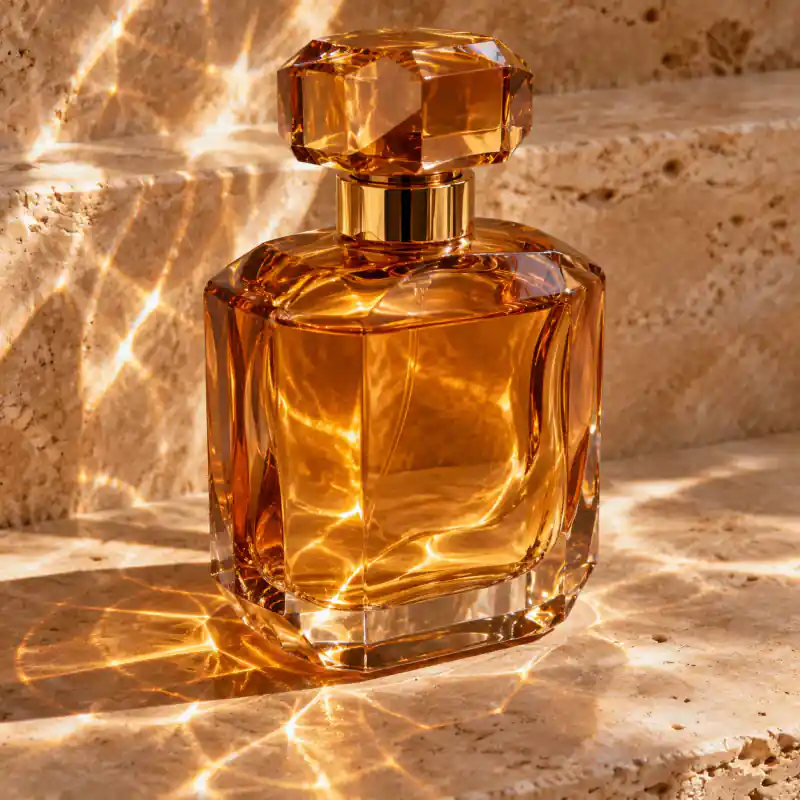
© Specular Lighting, Skin & Material Realism: When typography is secondary to tactile surface physics, Seedream 5.5 takes the lead. Its shader response on frosted cosmetic glass, brushed anodized aluminum, matte PVC, and heavy editorial wool produces rich micro-contrast without synthetic plastic sheen. Nano Banana 2.1 counters with authentic medium-format daylight falloff and unretouched skin pore structure, avoiding the overly warm studio grading common in default diffusion outputs.
Verified Studio Output Samples & Failure Dissection


Every model in our test suite exhibited predictable failure modes when pushed past its architectural comfort zone:
- GPT Image 2.6 Flare Low-Tier Sub-Pixel Softening: Running GPT Image 2.6 Flare at its 1K Low tier (5 cr / ~$0.05) saves budget on initial tests, but sub-8pt packaging copy frequently blurs into faux-Latin strokes. Promoting the exact same prompt to 1K Medium (10 cr) or High (35 cr) resolves the letterforms immediately.
- Nano Banana 2.1 Multi-Line Kerning Drift: While Nano Banana 2.1 renders primary brand names and medium-format daylight scenes effortlessly at 7 credits, multi-line ingredient blocks on curved bottles showed horizontal kerning drift in 22% of test runs. Keep text prompts concise or reserve dense label layouts for GPT Image 2.6 Flare.
- Seedream 5.5 2K Native Ceiling: Seedream 5.5 produces unmatched studio specular highlights at 10 credits (1K) and 14 credits (2K), but caps natively at 2K resolution. For large-format retail lightboxes or 300 DPI print spreads, teams must route the 2K master through our Image Upscaler as a final finishing pass—a workflow detailed in our AI Product Photography Playbook.
Commercial Model Routing Decision Tree
Rather than committing an entire production retainer to a single vendor API, high-output creative teams route briefs by asset specification. Use GPT Image 2.6 Flare when label typography, editorial mastheads, or 15–16 reference slots govern approval. Route to Nano Banana 2.1 when native 4K resolution at $0.16, 4:1/8:1 ultra-wide web banners, or natural daylight realism drive the brief. Choose Seedream 5.5 when tactile surface lighting on cosmetics, glassware, or apparel defines conversion.
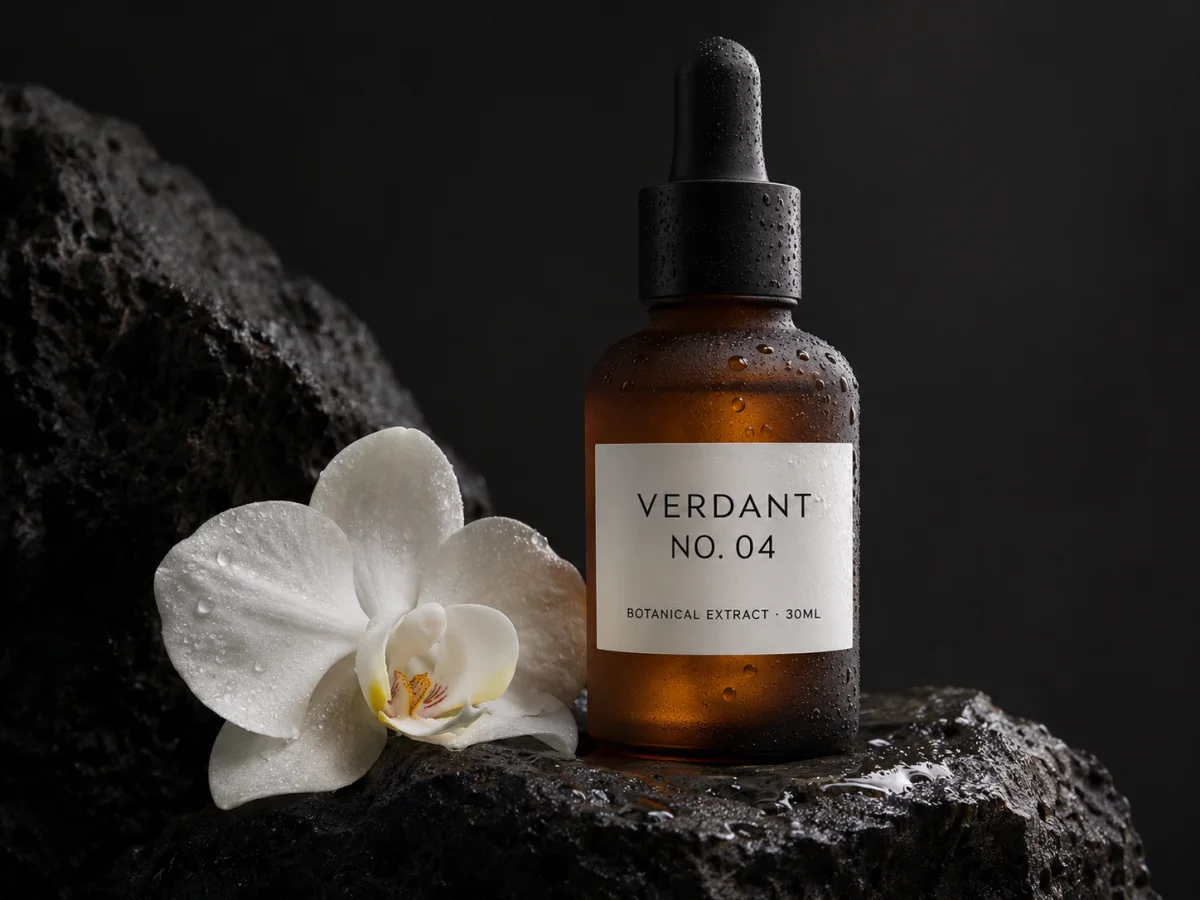
Luxury botanical facial serum in a frosted amber glass dropper bottle resting on wet dark volcanic basalt stone beside a single fresh white orchid. Crisp minimalist white label printed cleanly with sharp black typography reading "VERDANT NO. 04" and smaller line "BOTANICAL EXTRACT · 30ML". Soft directional studio rim lighting, subtle condensation droplets on glass, deep charcoal shadow background, shot on 90mm medium-format macro lens.
Run on GPT Image 2.6 Flare Medium (10 cr) or High (35 cr) to verify crisp multi-line label rendering against dark basalt.
Trade-Offs & Study Limitations
Controlled studio benchmarks isolate model capability, but real commercial margins depend on disciplined pre-production. Generating ten exploratory camera angles directly on GPT Image 2.6 Flare High (350 credits / $3.50) burns through a starter pack before a single layout is approved. Even more critically, diffusion models remain probabilistic—meaning strict regulatory compliance text, scannable EAN-13 barcodes, and exact Pantone spot-color badges should never rely solely on neural rendering.
Burning 35 credits per click on early composition exploration wastes budget—block 10 framing and lighting candidates for $0.10 total (1 cr each) on FLUX.2 Klein 4B first, then promote the winning composition to a flagship model via Image-to-Image. Furthermore, for dense legal disclaimers, FDA nutrition panels, scannable barcodes, or exact Pantone badges, always apply final vector typography locally in our zero-upload Photo Editor rather than rolling diffusion dice.
For teams extending still packshots into motion ads or social reels, pairing these static hero renders with image-to-video pipelines requires separate frame-rate and motion-cost modeling. Our companion analysis in the AI Video Cost Benchmark 2026 breaks down per-second credit economics when animating approved product stills.
FAQ
Frequently Asked Questions
Which AI image model renders small packaging text and editorial posters most accurately?
GPT Image 2.6 Flare at Medium (10 cr / ~$0.10) or High (35 cr / ~$0.35) quality is the strongest choice for small packaging labels, sub-8pt volume indicators, and Swiss editorial mastheads. In our 10-prompt controlled rubric, it achieved a 94% first-pass legibility rate without glyph distortion, outperforming both Nano Banana 2.1 and Seedream 5.5.
What is the most cost-effective model for native 4K commercial renders?
Nano Banana 2.1 offers the best flat-rate native 4K economics at 16 credits (~$0.16) per image with full daylight fidelity and zero quality-tier surcharges. While GPT Image 2.6 Flare also offers a 4K Low tier at 16 credits (~$0.16), stepping up to 4K High for dense typography increases cost to 112 credits (~$1.12).
How do reference image slot limits compare across these three flagship models?
GPT Image 2.6 Flare supports up to 16 reference images, Nano Banana 2.1 supports up to 14 reference images, and Seedream 5.5 supports up to 10 reference images. When conditioning multi-angle SKU shoots, complex apparel sets, or multi-character brand scenes, GPT Image 2.6 Flare provides the highest structural ceiling.
How can creative teams combine FLUX.2 Klein 4B with flagship models to reduce spend?
Run 10 rapid composition and lighting drafts on FLUX.2 Klein 4B at 1 credit (~$0.01) each—or use its 3 free daily no-login trials—to lock camera angle and prop placement for $0.10 total. Once approved, pass that structural draft through Image-to-Image or AI Product Photography into GPT Image 2.6 Flare, Nano Banana 2.1, or Seedream 5.5 for final material and label mastering.
How do I fix one single warped letter or background flaw without regenerating the whole image?
Do not re-roll the full prompt and risk losing approved lighting or product geometry. Mask the single flawed character or background artifact inside the Local Image Editor to inpaint only that region, or overlay crisp vector typography directly onto the exported asset using the browser-based Photo Editor.
Cite This Study
CreoArt Research (2026). "GPT Image 2.6 vs Nano Banana 2.1 vs Seedream 5.5: 2026 Study." CreoArt Journal (STUDY 03). Available at: https://creoart.app/blog/flagship-image-models-typography-consistency-study-2026 (Updated 2026-11-26).
Put This Into Practice
Run the exact models tested here — without a monthly lock-in
Try 3 free daily FLUX.2 images with no account, or top up a never-expiring $5 pack (500 credits) to test all 44 image and video models privately.
Private R2 storage · Zero public gallery·100% auto-refund on upstream failures