Quick Verdict · Flagship Video Showdown
- 011080p Price Parity on Google Veo 3.1: Veo 3.1 charges 54 credits/s ($0.54/s) for both 720p and 1080p silent renders—giving you full HD delivery at zero resolution surcharge over 720p.
- 0273% 1080p Savings on Kling 4.0 vs. Seedance 2.5: Silent 1080p costs $0.54/s on Kling 4.0 compared to $1.98/s on Seedance 2.5—turning a 5-second HD shot from $9.90 down to $2.70 with superior hard-surface physics.
- 03Lowest Native 4K/s Rate on Veo 3.1: Native 4K silent output drops to 96 credits/s ($0.96/s) on Veo 3.1, beating Kling 4.0 ($1.35/s) by 29% and Seedance 2.5 ($2.98/s) by 68%.
- 044–30s Audio-Synced Acting on Seedance 2.5: Only Seedance 2.5 combines continuous 4–30 second takes, seven aspect ratios, and a 1.5x native audio multiplier—making it the sole option for long, dialogue-driven performance shots.
Headline “starting from” pricing on generative video pages is the oldest trap in AI post-production. A model advertised at thirty-six cents per second sounds cheap until you switch the output dropdown from a 480p social preview to a 1080p broadcast master and enable synchronized sound. Across a twenty-shot commercial rough cut, that single toggle can swing your render invoice by more than four hundred dollars.
When you run paid client jobs, you do not care about base draft pricing. You care about the delivered master rate—specifically what happens to your burn rate at 1080p and 4K, how each engine handles rigid geometry under camera movement, and whether native audio saves an hour of foley work or ruins a take.
Using live, verified rates from CreoArt’s pay-as-you-go wallet—where a $5 never-expiring pack buys 500 credits at an exact $0.01 per credit—we benchmarked Seedance 2.5, Kling 4.0, and Google Veo 3.1 across real production specs. Every figure below reflects actual per-second and per-clip math rather than marketing estimates.
The Resolution & Audio Cost Ladder (Where Budgets Actually Diverge)
The three flagship engines scale along completely different pricing curves. Seedance 2.5 starts low at 480p ($0.36/s) for rapid blocking, then climbs steeply—jumping 2.2x at 720p ($0.80/s), another 2.47x at 1080p ($1.98/s), and peaking at $2.98/s for 4K. If you render long 1080p takes directly on Seedance 2.5 without testing first, a single 15-second silent shot costs $29.70.
Kling 4.0 flattens the middle of that curve. It omits 480p entirely, opens at $0.36/s for 720p, and charges just $0.54/s for 1080p—a modest 50% bump for more than double the pixel count. Even at 4K ($1.35/s), Kling 4.0 costs less than half of Seedance 2.5’s 4K rate.
Google Veo 3.1 breaks the ladder altogether at full HD. Both 720p and 1080p silent renders cost an identical 54 credits/s ($0.54/s), meaning there is zero financial reason to ever select 720p on Veo 3.1. Better still, Veo 3.1 undercuts both rivals at 4K with a $0.96/s silent rate.
| Specification | Seedance 2.5 (/seedance-2-5) |
Kling 4.0 (/kling-4) |
Google Veo 3.1 (/veo-3-1) |
|---|---|---|---|
| Duration Bounds | 4–30s (1s steps) | 3–30s (1s steps) | 4s / 6s / 8s (fixed discrete) |
| Aspect Ratios | 7 (auto, 21:9, 16:9, 4:3, 1:1, 3:4, 9:16) | 4 (16:9, 9:16, 1:1, 21:9) | 2 (16:9, 9:16) |
| Reference Inputs | 1 reference frame | 1 reference frame | 1 reference frame |
| Native Audio | Optional (1.5x multiplier) | Silent only (no audio) | Optional (1.8x multiplier) |
| 480p Silent Rate | 36 cr/s ($0.36/s) | N/A | N/A |
| 720p Silent Rate | 80 cr/s ($0.80/s) | 36 cr/s ($0.36/s) | 54 cr/s ($0.54/s) |
| 1080p Silent Rate | 198 cr/s ($1.98/s) | 54 cr/s ($0.54/s) | 54 cr/s ($0.54/s — same as 720p) |
| 4K Silent Rate | 298 cr/s ($2.98/s) | 135 cr/s ($1.35/s) | 96 cr/s ($0.96/s — lowest 4K/s) |
| Base Clip Cost | 5s 480p: $1.80 ($2.70 w/ audio)<br>5s 720p: $4.00 ($6.00 w/ audio) | 5s 720p: $1.80<br>5s 1080p: $2.70<br>5s 4K: $6.75 | 4s 1080p: $2.16 ($3.89 w/ audio)<br>4s 4K: $3.84 silent |
| Primary Shot Edge | Expressive acting, lip-sync & 7 aspect ratios | Silent 1080p hard-surface physics & 30s takes | Specular optics, volumetric light & cheap 4K |
Head-to-Head Across Four Commercial Shot Categories
Human Performance, Expressive Acting & Dialogue
Seedance 2.5 remains the strongest director’s tool when a human face carries the shot. Micro-expressions around the eyes, natural blink cadence, and weight transfer during dialogue stay cohesive across extended 12-to-20-second takes without collapsing into stiff mannequin movement.
Its 7-aspect-ratio support—including native 4:3 for anamorphic-style brand films and 3:4 for editorial portrait cuts—lets you frame subjects accurately from a single locked reference frame inside CreoArt’s image-to-video workspace. While Kling 4.0 occasionally over-smooths skin texture during rapid head turns, Seedance 2.5 preserves subtle cheek and jaw tension that holds up under color grading.
Hard-Surface Automotive, Product Rigidity & 15–30s Long Takes
For automotive commercials, consumer electronics, and architectural fly-throughs, Kling 4.0 delivers cleaner mechanical physics at less than a third of Seedance 2.5’s 1080p cost. Wheel spokes, embossed typography, and straight structural edges resist warping even during aggressive lateral dolly moves.
Because Kling 4.0 supports continuous durations from 3 to 30 seconds in 1-second increments, you can execute slow, uninterrupted product reveals without cutting around temporal drift. At $0.54/s for 1080p silent output, a full 15-second tracking shot costs $8.10—leaving plenty of margin in a client budget for multiple camera-angle alternates.
Specular Optics, Volumetric Lighting & Native 4K Mastering
When a commercial shoot moves from broad street framing into macro tabletop territory—luxury watches, cut crystal, brushed titanium, or backlit liquid—optical physics decides whether a shot survives color grading. Google Veo 3.1 holds a clear lead in how light refracts through curved sapphire glass, splits across beveled metal edges, and scatters through shallow volumetric haze without boiling or shimmering between frames.
Its pricing structure also flips standard upscaling economics on its head. Veo 3.1 charges an identical 54 credits per second ($0.54/s) at both 720p and 1080p, meaning there is zero financial reason to render 720p previews on this engine. At native 4K, Veo 3.1 drops to 96 credits per second ($0.96/s)—making it the lowest-cost 4K mastering engine of the three flagships, undercutting Kling 4.0 (135 cr/s, $1.35/s) by 29% and Seedance 2.5 (298 cr/s, $2.98/s) by 68%.
That optical precision comes with strict editorial guardrails. Veo 3.1 locks you into fixed durations of 4, 6, or 8 seconds and only two aspect ratios: standard 16:9 widescreen and 9:16 vertical. If your agency brief requires a 1:1 paid social cutdown, a 21:9 anamorphic banner, or an unbroken 18-second continuous take, you have to reframe in post or route that specific shot elsewhere.
Synchronized Foley vs. Silent NLE Post-Production
Native audio generation saves hours of timeline spotting when sound is tightly coupled to on-screen motion, but the multiplier math demands discipline. Enabling synchronized audio adds a 1.5x cost multiplier on Seedance 2.5 and a 1.8x multiplier on Veo 3.1, whereas Kling 4.0 outputs strictly silent video files.
On a 4-second 1080p shot, Veo 3.1 jumps from 216 credits ($2.16) silent to 389 credits ($3.89) with native audio—an extra $1.73 for four seconds of sound. Seedance 2.5 at 1080p climbs from 792 credits ($7.92) silent to 1,188 credits ($11.88) with its 1.5x audio multiplier, adding $3.96 to a single 4-second take.
Use native audio only when frame-accurate acoustic sync is hard to fake in post: footsteps crunching on wet gravel, spoken dialogue lip-sync, ice cracking in a tumbler, or a chronograph pusher clicking under a macro lens. For music-driven brand anthems, voiceover spots, and atmospheric room tone, render silent plates on Kling 4.0 at 54 cr/s ($0.54/s at 1080p) or silent Veo 3.1 and lay clean 48kHz stems in DaVinci Resolve or Premiere Pro. You keep full multitrack stem control and avoid paying a 50% to 80% surcharge on every visual retouch.
Verified Studio Keyframe Comparison & Test Prompt


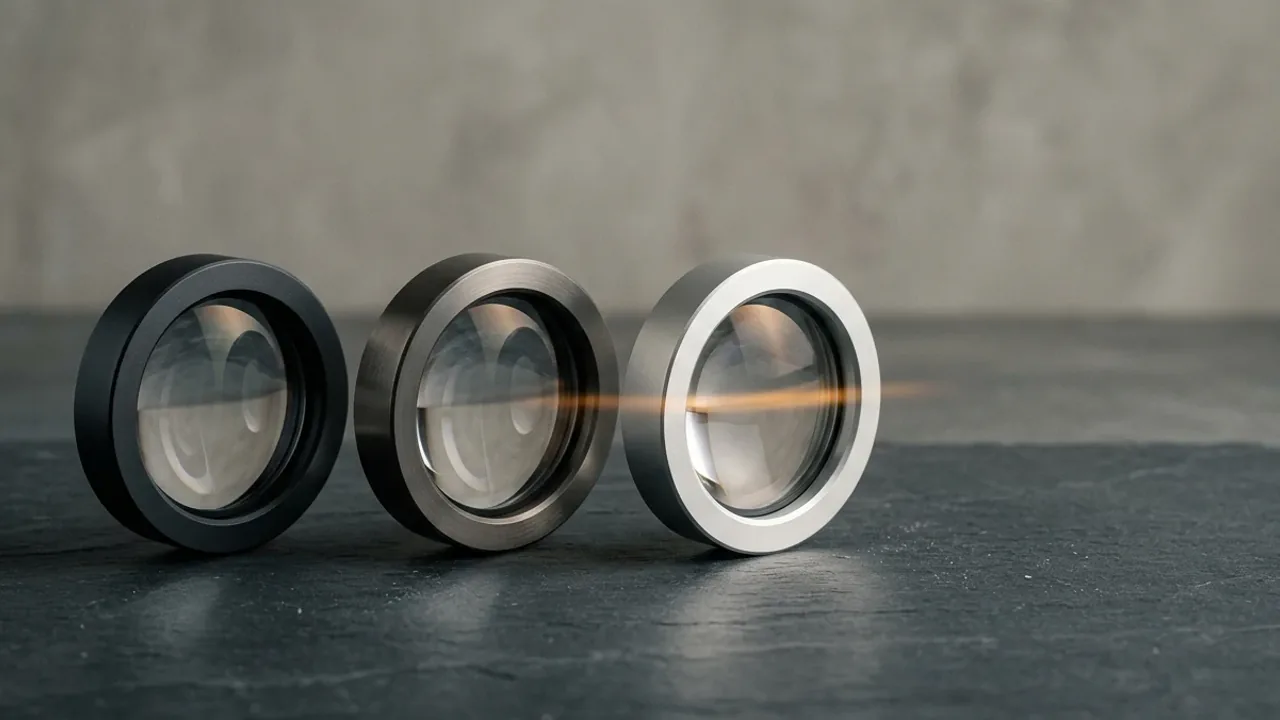
Low-angle stabilized tracking shot gliding smoothly beside a matte dark titanium chronograph watch resting on wet black basalt under slow falling rain droplets. Soft amber studio rim light sweeps across the brushed bezel and sapphire crystal while distant street bokeh shifts with realistic parallax. Keep watch dial markings, hands, and case bevels strictly rigid with zero focal breathing over a 4-second arc.
Run this identical prompt from the same locked keyframe across Seedance 2.5, Kling 4.0, and Veo 3.1 inside one wallet to compare reflections and rigidity.
Honest Limitations & Smart Hybrid Routing
No single model carries an entire commercial edit without compromise. Seedance 2.5 delivers unmatched facial micro-expressions and flexible 4–30s pacing across 7 aspect ratios, but at 198 cr/s ($1.98/s) for 1080p and 298 cr/s ($2.98/s) for 4K, burning five prompt iterations on a 10-second shot costs nearly $100 before audio. Kling 4.0 locks mechanical geometry at an efficient 54 cr/s ($0.54/s) at 1080p across 3–30s and 4 ratios, yet lacks native audio and renders human skin slightly stiffer than Seedance. Veo 3.1 wins optical lighting and $0.96/s 4K mastering, though its 8-second ceiling and 2-ratio limit rule it out for ultra-wide or long-take sequences.
Smart post-production teams treat these engines as specialized cameras on the same truck rather than competing subscriptions, as detailed in our 2026 AI Video Cost Benchmark.
Never test raw camera directions at 54 to 298 credits per second. Draft motion physics first on MiniMax H3 (7 cr/s, $0.28 for 4s) or Wan 3.0 (12 cr/s), then promote only your proven prompt and locked keyframe to Seedance 2.5, Kling 4.0, or Veo 3.1.
FAQ
Frequently Asked Questions
Which of the three flagship models is cheapest at 1080p and 4K?
At 1080p silent, Kling 4.0 and Google Veo 3.1 tie at 54 credits per second ($0.54/s, or $2.16 for a 4-second clip), while Seedance 2.5 costs 198 cr/s ($1.98/s). At native 4K silent, Google Veo 3.1 is the clear lowest-cost option at 96 cr/s ($0.96/s), beating Kling 4.0 (135 cr/s, $1.35/s) and Seedance 2.5 (298 cr/s, $2.98/s).
Which model handles native audio best, and how much does it add to the bill?
Seedance 2.5 and Veo 3.1 both generate frame-locked foley and ambient sound, while Kling 4.0 is silent only. Seedance 2.5 applies a 1.5x multiplier—bringing a 4-second 1080p clip from 792 credits ($7.92) to 1,188 credits ($11.88)—whereas Veo 3.1 applies a 1.8x multiplier, bringing a 4-second 1080p clip from 216 credits ($2.16) to 389 credits ($3.89).
Why does Google Veo 3.1 cap at 8 seconds while Seedance 2.5 and Kling 4.0 reach 30 seconds?
Veo 3.1 restricts output to fixed 4-, 6-, and 8-second clips to preserve strict optical coherence, lighting stability, and frame-to-frame sharpness without temporal drift. Seedance 2.5 (4–30s) and Kling 4.0 (3–30s) support continuous long-take generation for unbroken camera moves, establishing shots, and extended dialogue beats.
Should I choose Kling 4.0 or Seedance 2.5 for rigid product shots versus human acting?
Route hard-surface products, vehicles, architecture, and mechanical motion to Kling 4.0, where rigid geometry holds tight at 54 cr/s ($0.54/s) in 1080p. Route close-up talent, subtle eye-lines, hand choreography, and emotional performance to Seedance 2.5, which preserves natural skin and anatomical weight across long takes.
Do I need three separate monthly subscriptions to run Seedance 2.5, Kling 4.0, and Veo 3.1?
No. Inside CreoArt’s AI video generator, all three flagships plus 42 companion models—including MiniMax H3 and Wan 3.0—share one pay-as-you-go balance starting with a $5 never-expiring pack (500 credits at $0.01/cr) and automatic credit refunds on failed runs.
Put This Into Practice
Run the exact models tested here — without a monthly lock-in
Try 3 free daily FLUX.2 images with no account, or top up a never-expiring $5 pack (500 credits) to test all 44 image and video models privately.
Private R2 storage · Zero public gallery·100% auto-refund on upstream failures